
Mon 10 November 2025
The power of agnosticism

There has never been more choice to consumers when it comes to propulsion systems of their vehicles. Combustion engines, Battery Electric Vehicles, Hybrids, Range Extenders and synthetic fuels are all available on the market today, with new systems joining every month.
This reflects the record pace at which customer preference and expectation changes. This uncertainty represents a significant dilemma for car brands.
If demand for entire vehicle categories can change so quickly, how can automakers confidently invest in a multi-year car development project? It is upending the business models of automakers worldwide with disruptive brands and technologies changing the face of the industry rapidly.

For automakers to successfully innovate, they need assurances their invested resources will not go to waste. This means knowing they can adapt their vehicles – both existing and in development – in case the market does shift unexpectedly. Crucially, automakers must ensure their vehicles leverage power-agnostic technology that can accommodate hybrids, pure-EVs, and traditional combustion vehicles.
Components which transmit the energy generated by the power source – whether they be drivelines, transmissions, or control systems – would not need to change at all.
When it comes to individual components, power-agnostic parts and systems are ones that can work with a range of power sources, rather than choosing hyper-optimised parts that work with only a single propulsion type.
Embracing power-agnostic components ensures suppliers can pivot quickly to change, as well as enabling automakers to adapt their offerings without radical, expensive reworks.
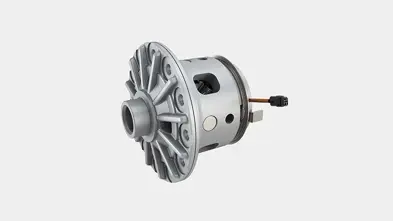
This makes agnosticism critical for car brands: it slashes the risk associated with critical investment and innovation. And there are other benefits on offer from embracing more flexible components and vehicle architecture.
By dramatically improving the reusability and interoperability of parts, it enables standardisation of tooling, knowledge sharing between teams, and reduces system integration challenges.
The result is not just greater willingness by car brands to invest in new vehicles and technologies, but also a more streamlined pipeline for automotive innovation. With so much uncertainty and competitive pressure facing the automotive sector in the coming years, power-agnosticism will prove a critical tool for the industry.
Related articles
-
- Insight
- Friday, January 30, 2026
The circular economy is key to reaching net zero
-
- Insight
- Thursday, December 18, 2025
Sideshaft Remanufacturing – Part 3: Creating a circular economy
-
- Insight
- Wednesday, December 10, 2025
Sideshaft Remanufacturing – Part 2: The GKN Automotive process
-
- Insight
- Wednesday, December 3, 2025
Sideshaft Remanufacturing – Part 1: At a Glance